Uncategorized
How ISO 9001 and IATF 16949 Help Buyers Reduce Automotive Supplier Risk
ISO 9001 and IATF 16949 reduce supplier risk only when you verify them. ISO 9001 shows that a supplier runs a documented quality management system. IATF 16949 adds requirements specific to the automotive supply chain. Before relying on either, confirm the certificate’s legal entity, scope, issuing body, and validity dates. This guide explains what each standard tells a buyer, and how to check a certificate before it influences a sourcing decision.
What Each Standard Tells a Buyer
ISO 9001 is a general quality management standard. A certified supplier has defined processes, records problems, and acts on them in a documented way. IATF 16949 is built on ISO 9001 and applies throughout the automotive supply chain, with added requirements for that industry. It replaced the earlier ISO/TS 16949 in 2016, so older documents may still use the previous name. Treat either standard as evidence of process discipline, which lowers the odds of repeated defects, rather than as a quality guarantee.
Neither standard certifies that a particular product will perform a certain way. They describe how a supplier manages quality, not how long a specific fabric will last. For product performance, you still need test reports for the properties your application requires.
Four Things to Check on Any Certificate
| Check | Question to ask | Why it matters |
| Legal entity | Does the name match the company signing your contract? | Certificates are issued to specific entities |
| Scope | Which products, processes, and sites are covered? | Your product must fall inside it |
| Issuing body | Which certification body issued it? | Confirms who audited the supplier |
| Validity | What are the issue and expiry dates? | An expired certificate offers no assurance |
Ask the supplier for a copy of the certificate, and where possible confirm its status with the issuing body.
What This Means When Evaluating Sinar Group
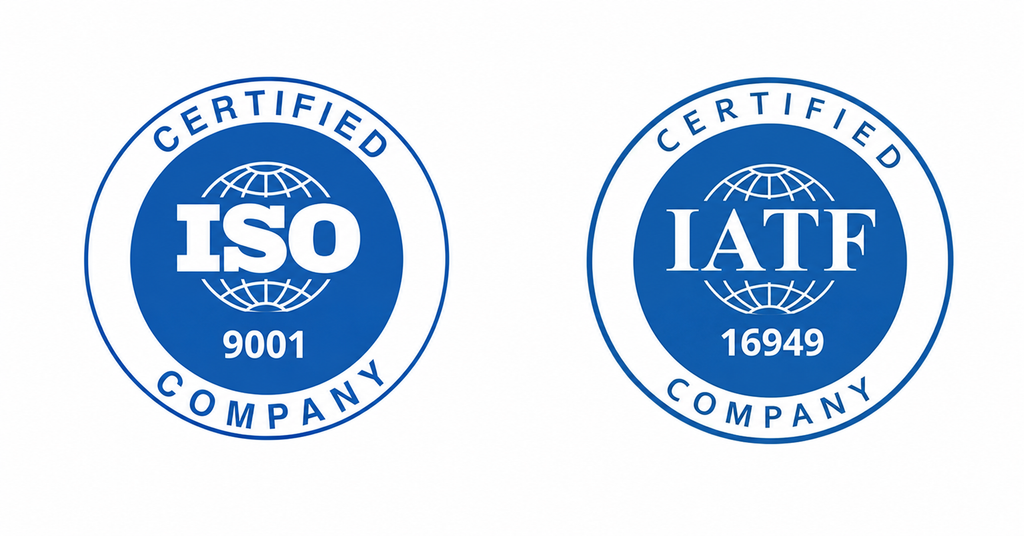
Sinar Group products, on its about page, are ISO 9001 and ISO/TS 16949 compliant, and displays SNI and TKDN certificates. Its Transport range is described as produced and tested to automotive standards. Buyers are welcome to request copies and apply the four checks above.
Beyond the Certificate
Certification is one input. For automotive and fleet projects, also ask for:
- Records showing colour and batch consistency across production runs.
- Test reports for the properties your specification requires.
- A description of how corrective actions are handled when a defect is found.
- Written capacity and lead time for your volume.
- How the supplier notifies buyers of changes to materials or processes.
Taken together, the certificate and these records give you evidence, not only assurances.
Need certificate copies or technical documents for your evaluation? Contact the Sinar Group team through our contact page.
FAQ
- Is ISO 9001 enough for an automotive project?
ISO 9001 is a general quality management standard. Many automotive buyers also ask for IATF 16949, but requirements differ by customer, so check your own supplier requirements first. - What is the difference between ISO/TS 16949 and IATF 16949?
IATF 16949 replaced ISO/TS 16949 in 2016. Older documents may still use the previous name, so ask which certificate is currently valid for the supplier. - How can I check that a certificate is current?
Compare the legal entity, scope, issuing body, and dates on the certificate against your contract. Where possible, confirm its status with the issuing certification body. - Does a certificate guarantee how a fabric will perform?
No. A certificate describes how a supplier manages quality, not how long a specific product will last. Ask for test reports on the properties your application requires.