Design Resources
Beyond Colour: Reading Texture and Pattern in Transport Upholstery
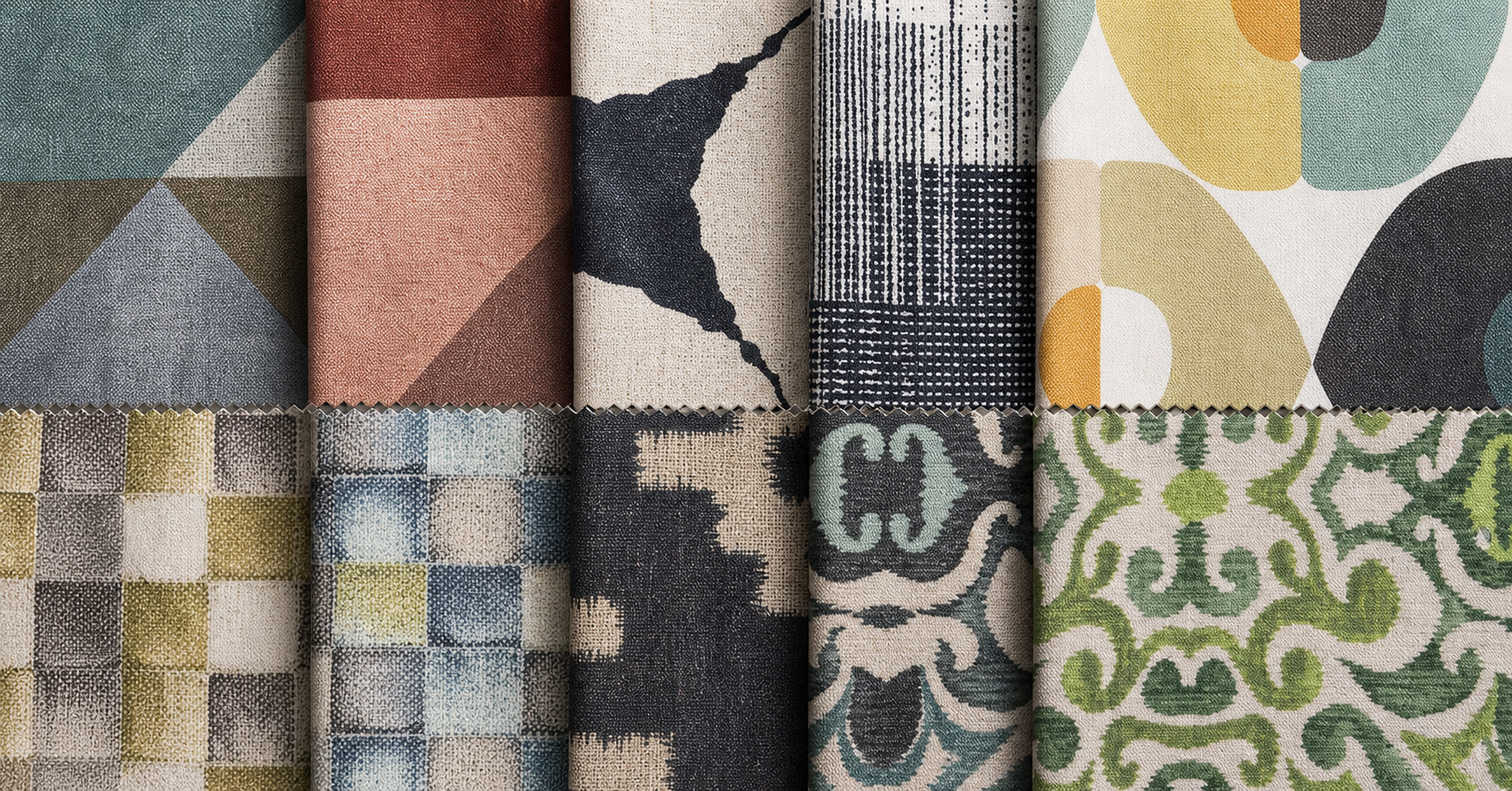
Colour is usually the first thing people notice in a swatch. Texture and pattern often decide whether that colour works on a real seat. This article explains how to read both, from a close-up sample to a full seat in the vehicle. It offers practical prompts for reviewing physical samples. It does not rank materials, and appearance alone cannot confirm how a material will perform.
Start with the seat and its surroundings
A swatch is small. A seat is not. Before comparing samples, look at where the upholstery will sit.
Note the shape of the seat, the stitching style you have in mind, and the finishes beside it, such as door panels, trim and flooring. A surface that looks calm on its own can look busy next to a strongly textured panel. The reverse can happen too. Write these neighbours down first. They become the standard against which every sample is judged.
Also think about who will see the seat, and from where. A passenger sees it from a different distance than the person fitting it.
Read texture at close range
Texture is what you see and feel with the sample in your hand. It comes from how the material is made.
The Regency Transport portfolio includes woven fabric, synthetic leather, moquette and knitted fabric. In general, a woven surface shows its weave, a knitted one shows its loops, a moquette has a short pile, and synthetic leather often carries a grain. Treat this as a general guide, not a product specification.
Look at the sample straight on, then from a low angle. Run a hand across it. Notice how the surface catches the light and whether the texture looks even across the whole sample. Then photograph it with the label visible.
Check pattern scale at seat level
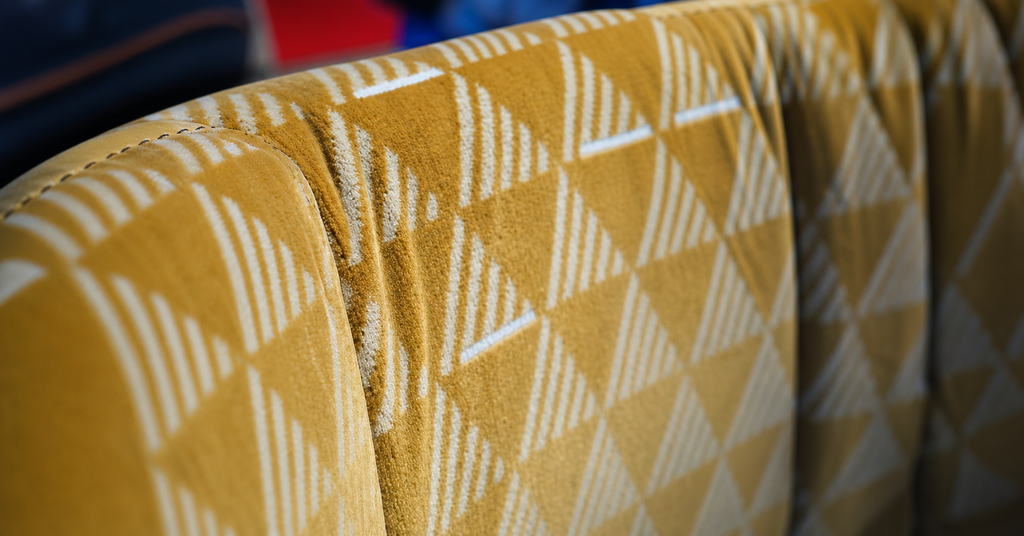
Pattern behaves differently at different sizes. A small sample can hide a repeat that becomes obvious across a full seat back.
Ask for the largest sample available. If it is still small, place several pieces side by side to see how the repeat continues. Check how the pattern meets at seams and panel breaks, because stitching can interrupt it. Then step back to roughly the distance a passenger would sit from another seat. At that distance, fine detail often fades and only the larger shapes remain.
| Question | At close range | At seat scale |
| What do you see? | Texture, grain or weave | Overall tone and pattern rhythm |
| What can mislead you? | A very small sample | Distance, seams and panel breaks |
| What should you record? | Feel, sheen and label | Photographs taken at seat height |
Compare samples under the intended lighting
Light changes how a surface looks. Daylight, a cool white cabin lamp and a warm bulb can make the same sample look quite different.
Review samples in the lighting they will meet in service. If that is not possible, check them in at least two settings, such as daylight near a window and the cabin light. Keep the samples next to each other, and use one consistent setup for every photograph. Photos taken under different lights are not comparable.
Remember that a screen shows only an approximation of colour. Use photographs as a record of what you saw, not as a replacement for the sample.
Record visual preferences separately from technical requirements
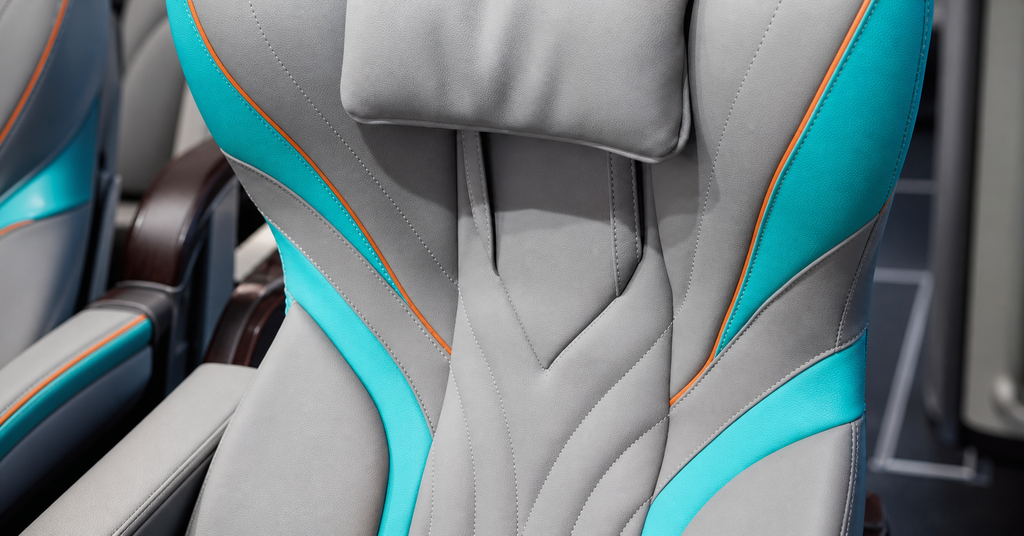
A good review ends with two lists. The first records visual preferences: tone, texture, pattern scale and sheen. The second records technical requirements that the product team must verify, such as abrasion, flame performance and fit with the vehicle.
Keep the lists apart. A sample can satisfy everyone visually and still fail a technical requirement. Appearance does not tell you about abrasion resistance, flame resistance or compatibility with a particular vehicle. Those points need verified data.
For the technical side, Understanding Abrasion Resistance in Upholstery Fabrics is a useful starting point. For a wider review process, see Beyond the Sample: 7 Checks Procurement Teams Should Make Before Approving Upholstery Materials.
When your visual shortlist is ready, the next step is to see what is available.
Explore the Regency Transport material portfolio.
FAQ
Can a photograph replace a physical sample?
No. A photograph shows colour and pattern as a camera and a screen interpret them. It cannot show feel, sheen or how the surface behaves in real use. Use photographs to record your observations and to share them with your team, and make the final visual decision with the physical sample.
Does a similar appearance mean similar performance?
Not necessarily. Two materials can look alike and still differ in construction, wear behaviour or other properties. Confirm technical data with the product team before you treat two samples as equivalent.